Details matter.
A professional wrap is more than changing the color of a car. The quality of the installation shows up in the edges, the seams, the contours, the finishing and the final inspection.
We don’t consider the installation finished simply because the film is on the vehicle.
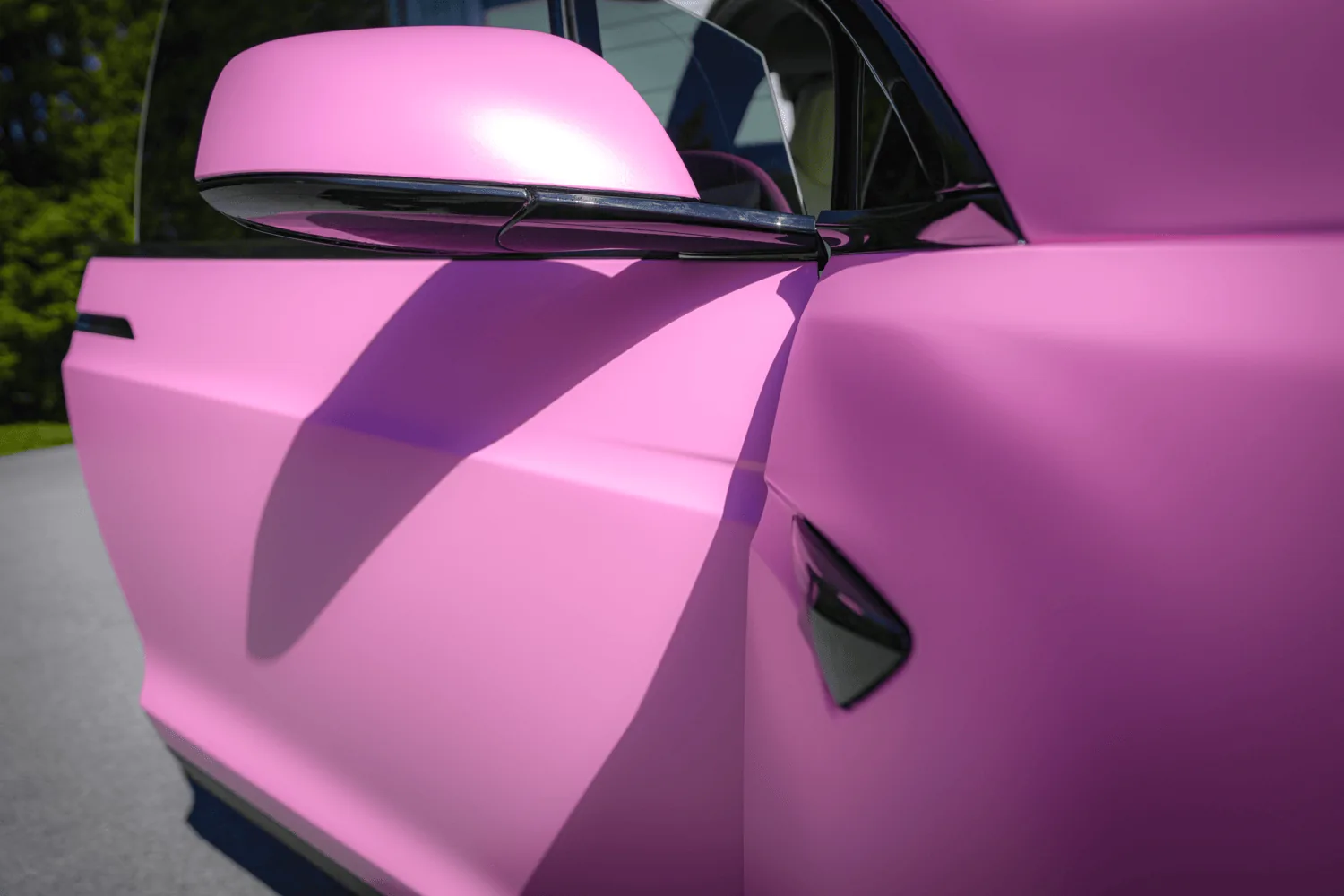
The edge is the tell.
Film carried over the edge and tucked into the gap behind it with a tuck tool, so the old color never shows — and where a fitting sits flush with no gap to tuck into, cut to the pattern and finished around it instead. Nothing comes off the car for either. It is the first thing we check, and the easiest thing to skip.
The film is only part of the job.The installation is the craft.
Material matters. Technique matters. Preparation matters. Finishing matters. Inspection matters.
Ten places an install shows its quality.
Edges
Film should be appropriately positioned and finished at applicable edges.
Seams
Seams should be intentionally placed and properly finished for the project.
Corners
Corners and transitions get specific attention.
Handles
Handle areas require careful installation and finishing.
Mirrors
Mirror surfaces and the areas around them need appropriate contour and edge work.
Bumpers
Complex bumper geometry requires controlled installation technique.
Contours
Curves and compound shapes require appropriate film handling and finishing.
Trim areas
Trim and the surfaces around it are reviewed for appropriate coverage and finish.
Post-heating
Vinyl has a memory. Stretched into a recess or around a curve it wants to pull back, and if nothing resets it, that pull is what lifts an edge weeks later. Post-heating takes the film past its forming temperature so it stops trying to return to its old shape — done properly it is the difference between a wrap that holds and one that creeps.
Overall appearance
The vehicle is inspected as one complete finished project.
Not every area is treated identically on every vehicle. What a panel needs depends on its geometry, the film and the condition it arrived in.
Look closer.The edge tells you a lot.
Professional installation comes down to how film terminates around edges and transitions. It is the first thing that fails on a rushed install and the easiest thing to check on someone else’s.
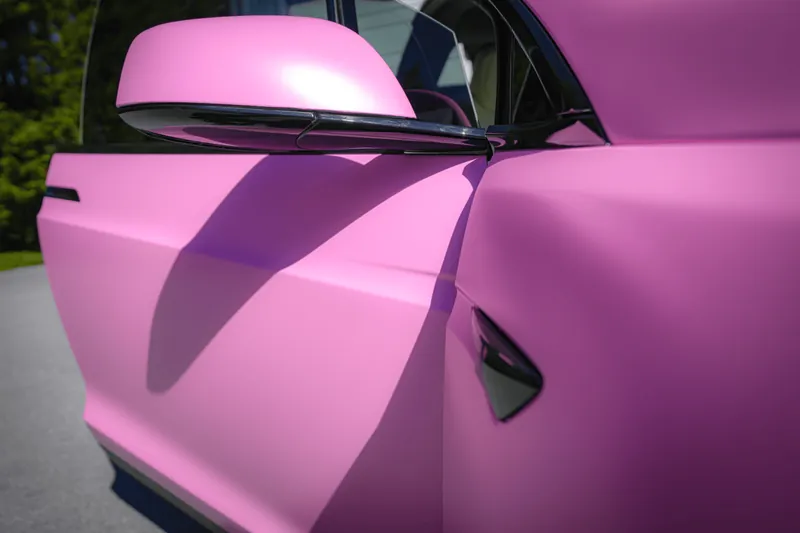
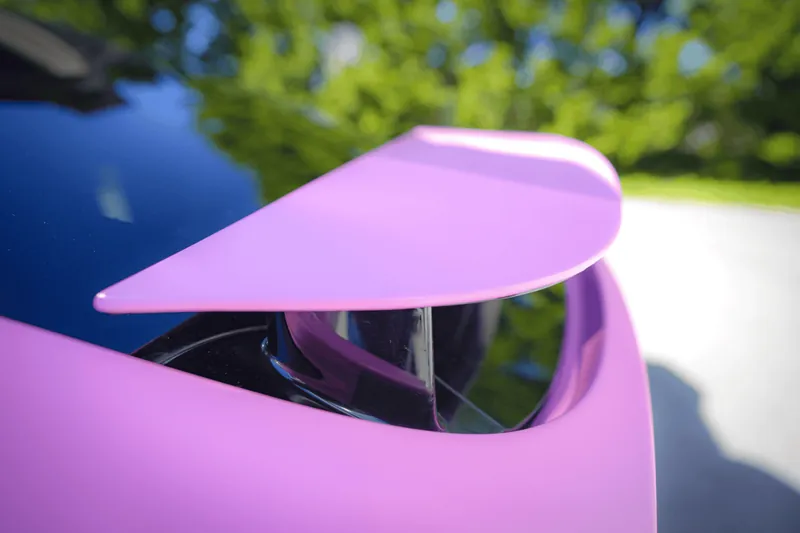
Seams should be intentional.
Where a seam goes depends on panel geometry, the design, the material, the film width, the vehicle and the installation requirements.
- Panel geometry
- Design
- Material
- Film width
- Vehicle
- Installation requirements
- Visual considerations
What we won’t claim
Not every vehicle can be wrapped without seams, and we won’t claim a seam is always invisible. The goal is that seams are placed and finished deliberately, not wherever the film ran out.
Curves aren’t flat.
Vehicles are full of curves, recesses, deep contours, compound surfaces and tight transitions. Film does not naturally want to lie across any of them.
- Curves
- Recesses
- Deep contours
- Compound surfaces
- Tight transitions
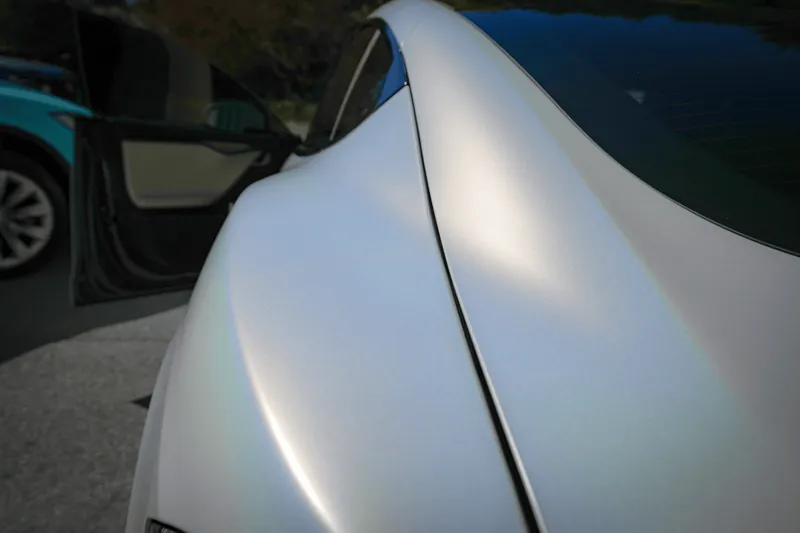
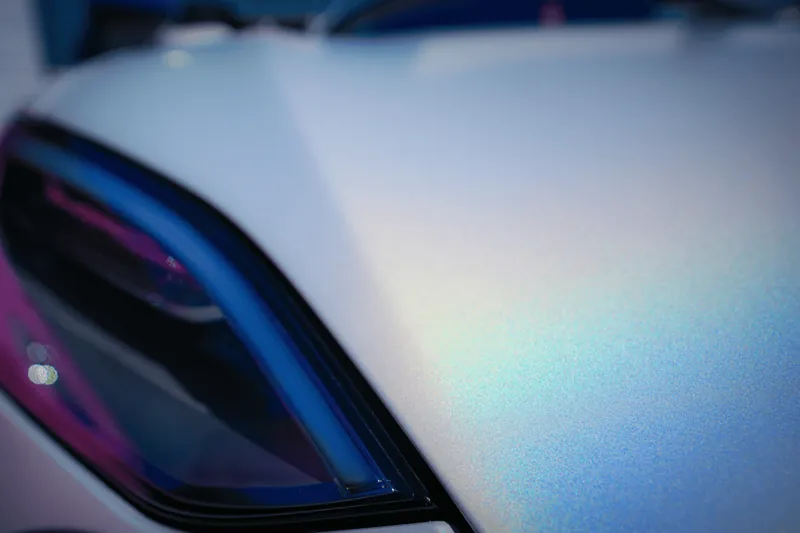
The craft, not the transformation.
The portfolio shows finished cars. This shows the parts of them that decide whether the install holds up.
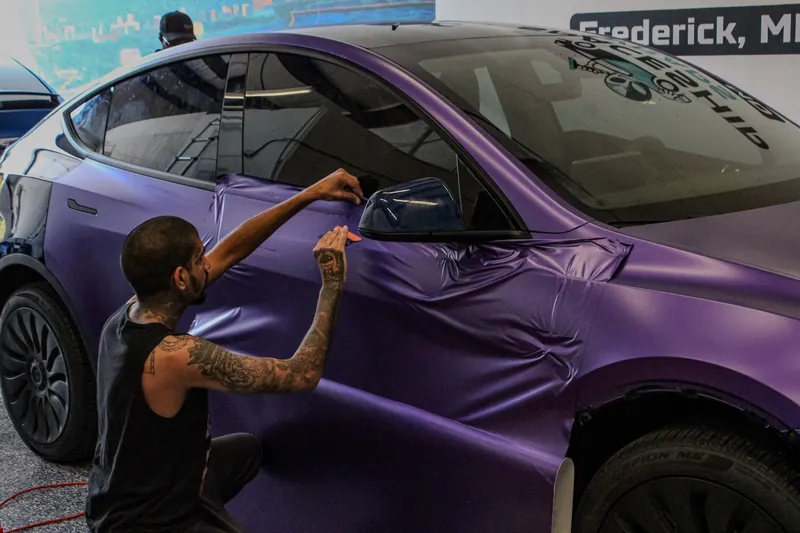
Every photograph here is our own work. We’ll keep adding as we shoot more — the gaps stay gaps rather than getting filled with someone else’s.
Each one is difficult somewhere different.
Different shape. Different challenges.
Where this model fights a wrap
Large flat panels and hard folds. Flats show every mistake, and the folds decide whether the install reads as sharp or soft.
- Large panels
- Sharp geometry
- Panel transitions
- Edges
- Corners
- Finishing
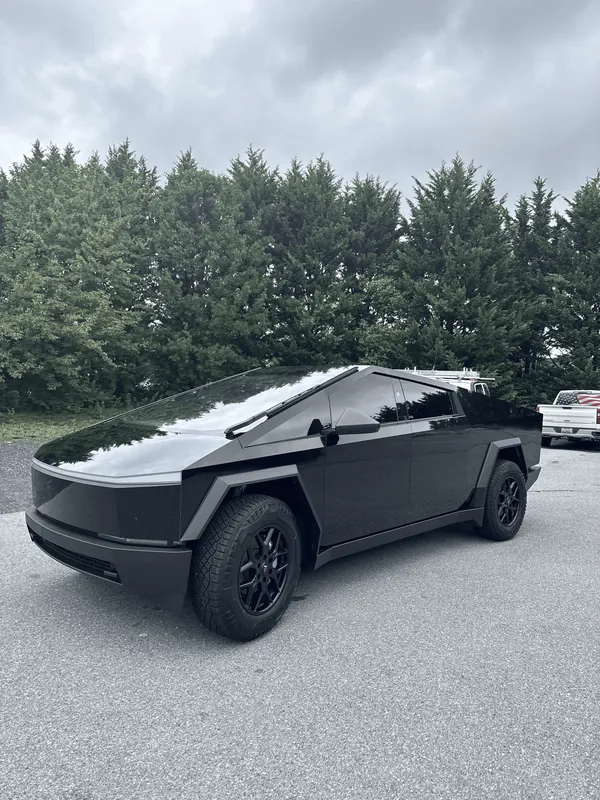
Clean lines. Complex details.
Where this model fights a wrap
A simple-looking car whose difficulty is concentrated in small areas — handles, mirrors, the bumper corners.
- Panel transitions
- Curves
- Handles
- Mirrors
- Bumpers
- Edges
- Finishing
No photograph here yet — and we would rather leave the space empty than borrow somebody else’s work to fill it.
Every curve has to be accounted for.
Where this model fights a wrap
More continuous curvature than the 3, and a rear quarter that punishes a rushed hand.
- Curves
- Bumpers
- Mirrors
- Handles
- Edges
- Panel transitions
- Finishing
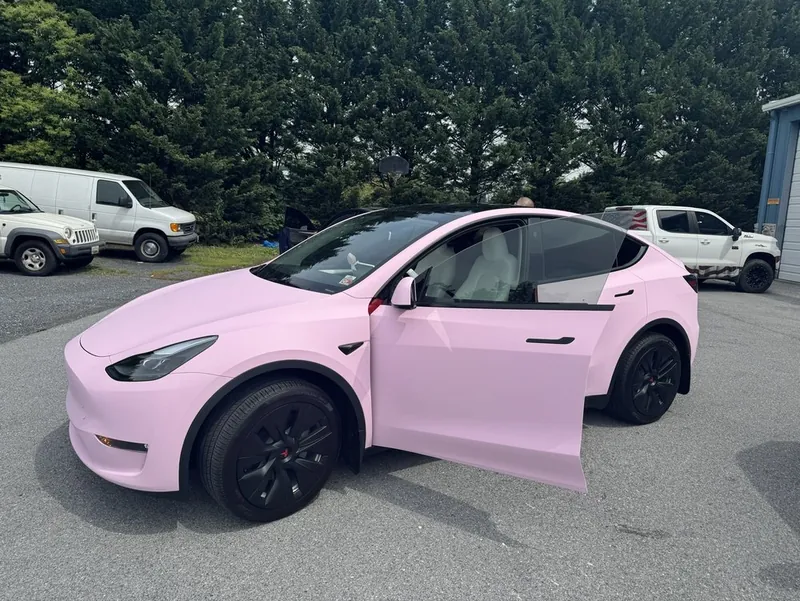
Great material still needs great installation.
3M and Avery Dennison make professional automotive films. The material does not install itself, and it does not rescue a poor install.
TeslaWrapper automotive installers are required to have professional experience with 3M and/or Avery Dennison automotive wrap films.
That is a hiring requirement we verify, not a manufacturer certification. TeslaWrapper is not certified, sponsored or endorsed by any film manufacturer.
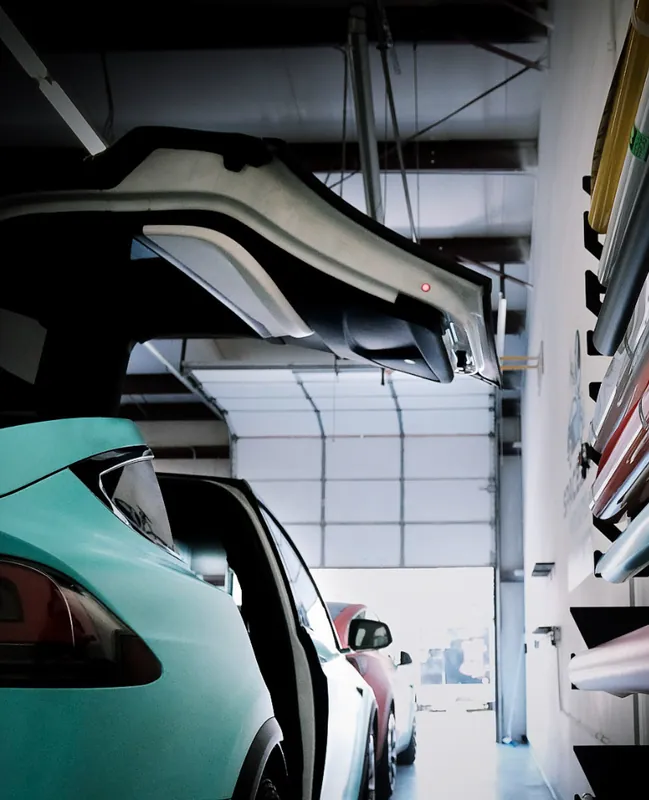
Then we inspect it.
Film
- Alignment
- Coverage
- Visible defects
- Wrinkles
- Bubbles
- Edge finish
- Seam finish
- Contours
- Adhesion concerns
- Post-heating and finishing
Vehicle
- Relevant components accounted for
- Trim properly seated where applicable
- Cameras and sensors not visibly obstructed
- No obvious installation-related concerns
- Condition reviewed against the intake record
Project
- Scope completed
- Material matches the project
- Required work completed
- Exceptions documented
- Delivery requirements satisfied
If something isn’t right, the vehicle doesn’t go out.
A significant issue found at inspection puts the project on quality hold. It is corrected and reinspected before delivery — a deadline is not a reason to hand back work we wouldn’t accept ourselves.
- Quality hold
- Correct
- Reinspect
- Customer delivery
This is a visual and functional inspection of our own work — not a comprehensive mechanical or electronic diagnostic.
How to wash a wrapped car.
Film is tougher than people expect and softer than paint. Nothing here is fussy — it is three habits that decide whether your wrap looks the same in year three.
Best: wash it yourself, at home
A hose with a spray nozzle, a clean mitt and two buckets. Rinse the loose grit off first so you are not dragging it across the film, wash top down, and rinse again. Keep a pressure washer well back and off the edges — a jet aimed straight at a seam is one of the few things that will lift film that was installed correctly.
Also good: a soapless wash
A soapless — or waterless — wash is a spray-on, wipe-off product that uses high-lubricity polymers to lift dirt off the surface and carry it into the towel, instead of a bucket and a hose. On light dust and fingerprints it is excellent, and it is the easiest option if you have no driveway or no water. Use plenty of product and a clean microfiber, and turn the towel often — the lubricity is what protects the film, so being sparing with it defeats the point.
It is for light soiling. On a car that is genuinely dirty, rinse it first — wiping heavy grit across film with a towel is exactly what you are trying to avoid.
Automatic car washes: a real risk, honestly stated
The machines are the problem, not the soap. Brushes, mechanical arms and the rails cars get pulled along make contact with the vehicle, and they carry grit from every car before yours. On film that can mark the surface, dull a satin or matte finish where paint would have shrugged it off, catch an edge, or leave the panel looking different from the ones beside it.
We would rather tell you the truth than give you a rule: touchless washes are a judgment call our own owner makes on his own car. It is a risk rather than a certainty, and it is your car and your call.
Worth connecting two things this site says in different places. Brush washes are a named exclusion from our twelve-month workmanship commitment — an edge caught by a spinning brush is not an installation fault. Touchless is not excluded. That is the line, and it is the reason we keep saying brushes rather than saying automatic.
What to avoid
- Pressure washers held close, or aimed at an edge or a seam
- Automatic washes with brushes or contact arms
- Abrasive polishes, cutting compounds and anything marketed as a scratch remover
- Fuel, solvents and bug remover left sitting on the film — rinse spills off promptly
- Scraping ice or bird mess off dry
Matte and satin finishes need a little more care than gloss: no wax, no polish, and no product that promises shine, because shine is the one thing you do not want on them. We go through all of this with you at handover, for your specific film.
How a panel actually goes on.
Panel by panel. Precisely installed.
Your Tesla is not covered in large sheets of vinyl and forced into place. The kit is prepared as individual, Tesla-specific panels so each section can be positioned, conformed and finished to that car’s own body lines and contours.
We deliberately keep extra working material on the pre-cut panels where the install needs it, so the installer has something to hold and stretch rather than a piece cut to exactly the finished dimension with nothing to grip.
Post-heating, where the film and the area call for it.
After film is installed and conformed, post-heating may be performed where the specific material and installation area require it. It stabilizes film that has been stretched into curves, contours and demanding shapes — and it is the step most often skipped, because nothing looks wrong on the day it is missed.
We follow the manufacturer’s procedure for the film actually being installed rather than applying one technique to every material. PWF is not vinyl and chrome is not either.
Edges and corners, finished rather than trimmed.
Edges and corners are worked after the film is positioned and conformed, and never left stopping short on the face of a panel with an exposed line of original color. Where a panel gap or a trim lip gives the film somewhere to go, the edge is carried into it and tucked with a tuck tool; where a fitting sits flush with no gap to tuck into, the film is cut to that panel’s pattern and finished around it. Nothing is taken off the car to reach either one.
Every completed panel is inspected for edge adhesion, lifting, wrinkles, bubbles, alignment and overall finish before we move to the next one. Installation does not end when film touches the panel — it ends when the panel is finished and checked.
The surface underneath decides the result.
Panels are cleaned and decontaminated before anything goes on — dirt, grease, road film, tar, adhesive residue. A normal car wash is not always enough: the paint has to be clean, properly prepared and completely dry before film touches it.
We pay particular attention to panel edges, seams, wheel areas and lower panels, which is where road contamination actually collects and where a wrap lifts first if it was skipped. And no, we do not use primer to compensate for preparation that was not done.
Different film. Different technique.
Not all wrap films install the same way. Adhesive behavior, conformability, stretch, repositionability, temperature range, post-heating and finishing all vary between materials.
We follow the applicable procedure for the film actually being installed rather than applying one method to everything. 3M Protection Wrap Film is dry-applied because 3M specify it; Conform Chrome behaves nothing like standard vinyl. Treating them the same is how installs fail.
Cutting that stays off your paint.
Every cut made on a car is a cut that can reach the paint under the film. So the aim is to make as few of them as possible: knifeless tape where it is practical, and Tesla-specific patterns cut before we arrive rather than blades worked freehand against a panel.
Where trimming on the vehicle is genuinely necessary, the cut is controlled and kept off the surface underneath. This is the other reason the kit is pre-cut — most of the cutting is done on a bench, not on your car.
Seams, placed on purpose.
Not every Tesla panel can be wrapped in one continuous piece, and front bumpers are where this comes up most: compound curves and complex shapes can make single-piece coverage impractical depending on the model and the material.
When a seam or overlap is needed we place it deliberately, rather than over-stretching film to force one piece past its practical working limits. Over-stretched film fails early and it fails visibly. The right piece in the right place beats one piece stretched to reach.
You don’t have to worry about the wash.
For customers in Northern Virginia we work with an independent mobile detailing professional who can come to your location. Where it makes sense we schedule them ahead of your installation so the car is washed and prepared for you — no extra trip, and no wondering whether your wash was good enough.
How the decontamination is arranged
The detailing and the installation are coordinated as part of your scheduled service where applicable.
They are a third-party professional rather than part of TeslaWrapper — we coordinate them, we do not employ them, and the detailing is their work rather than ours. Outside Northern Virginia this arrangement is not available and the preparation is yours to sort out; we will tell you exactly what it needs.
You provide the Tesla. We coordinate the preparation.
Install it properly. Remove it when you’re ready.
We use professional wrap films with pressure-sensitive adhesives made for vehicles, and we get adhesion through surface preparation, correct technique and the manufacturer’s procedures rather than through primer.
What nobody can guarantee is that removal leaves every vehicle exactly as it was. The condition and quality of the paint underneath, previous repairs, repainted panels, the age of the film, environmental exposure and how long the wrap stayed on all affect it — and 3M’s own warranty expressly excludes paint pull during removal.
What removal actually involves
A properly installed wrap comes off when you want the original color back or a different one.
Those are the things we inspect for before installing rather than finding out about at the end. If your car is a poor candidate, we would rather tell you before you pay us.
No primer shortcuts.
We do not routinely apply 3M primer to your Tesla’s painted surfaces as a way of making vinyl stick. Primer significantly increases adhesion — and it makes the film considerably harder to remove later.
What we do instead, and why
What we rely on instead is proper surface preparation, the manufacturer’s own installation procedures, and controlled application. That is slower and it is the difference between a wrap that holds because it was installed correctly and one that holds because it was glued down.
The point of a wrap is that it comes off and leaves the paint you started with. Anything that trades removability for easy adhesion is borrowing against the day you want the film gone — and paint pull at removal is already outside 3M’s warranty.
There are places a manufacturer procedure genuinely calls for it. If your car needs it somewhere, we will tell you where and why rather than doing it quietly.
Proper preparation. Not permanent-style adhesion.
We don’t just install it. We stand behind it.
Our workmanship coverage applies to installation-related problems under normal use, within the coverage period. Premature edge lifting, installation-related film failure, or another workmanship concern — tell us, and we inspect the car and work out the right fix.
If our workmanship fails inside the twelve months and you are a long way away, you do not have to make the trip twice: drive the car back to Ashburn and the rework is free, or we come to you for a $250 charger credit — once, inside the twelve months, with labor and material ours either way.
What it does not automatically cover
- Accidents or collisions
- Scratches, impacts and road debris
- Improper washing or cleaning
- Automatic brush car washes
- Pressure washing directly against edges or seams
- Chemicals or products not approved for the film
- Improper maintenance
- Vandalism or intentional damage
- Normal wear and tear
- Existing paint damage, or defective and previously repaired surfaces underneath
- Film deterioration from environmental exposure beyond the manufacturer’s recommendations
How we decide
We evaluate what is reported case by case and work out whether it is installation, the film, the condition of the vehicle, or something that happened to the car. We will tell you which we think it is and why, before you commit to anything.
Film warranties, where they apply, are the manufacturer’s and run on their terms — which differ by product. That is a separate thing from our workmanship, and we help you make that claim rather than absorbing it as free rework.
Most installation faults show up early, but the twelve months mean twelve months — a lifting edge or a seam that opens at month eight is inside the promise and gets treated that way. If something goes wrong at month thirteen, ask anyway. We may still help. What we cannot do is call it a warranty claim, because the written promise is twelve months.
Something wrong? Here is what to do.
You will get a reply within two business days, and usually the same day. A workmanship concern from somebody whose car we wrapped is not an inquiry we triage; it is a customer we owe an answer.
Text us a photoMaking a claim, step by step
- 01Stop touching it — do not rub, pull or press a lifting edge back down. That turns a small job into a bigger one.
- 02Photograph it. Wide enough to see the panel, close enough to see the edge.
- 03Text the photo to us. We will usually tell you what it is straight away.
- 04We will say whether we think it is installation, the film itself, or something that happened to the car — and why — before you commit to anything.
Where we put it right.
Not everything needs the studio. Depending on the issue and how involved it is, we can often sort a small correction at a Tesla event, at a Supercharger, or when we are already passing your way on the route to another customer.
That depends on the complexity. A lifted corner or an edge that needs re-heating is a ten-minute job almost anywhere; a panel that has to come off and go back on is not, and that one comes to the studio or we come to you properly. Send a photo first and we will tell you which it is.
What if it goes wrong and you live four hundred miles away?
The twelve months do not shrink with distance. A car we wrapped is a car we wrapped, and where you parked it afterwards does not change what we owe you.
Start the same way anyone does: photograph it and text it. Diagnosis is remote, free and usually same-day, and most of what people worry about is settled from a photograph without anyone driving anywhere — including the cases where the honest answer is that it is not a workmanship problem and we tell you so.
The repair itself does not cost you — that part was never in question. Labor and material are ours whether the car comes to us or we come to the car. What has a cost is getting the two into the same place, and here is the number rather than a conversation. Drive the car back to Ashburn and the rework is free. If you would rather not make that trip twice, we will come to you instead for a $250 charger credit — you cover the charging, we cover everything else, once, inside the twelve months. On four hundred miles that is a good deal for you and we know it; it is cheaper for us than losing the customer, and it means a lifted edge gets fixed instead of lived with.
And the sentence we are not going to delete from our own North Carolina page: for a straightforward color change, a good local installer beats a better distant one you cannot easily return to. That is still true. This is the answer for people who have read it and want to travel anyway.
We tried the cheap film. We watched it fail.
This is not brand loyalty and it is not a supplier deal. Before settling on 3M and Avery Dennison we bought and installed several of the budget import films — the ones that cost a fraction of the price and look identical on a roll and in a photograph.
They came off. Not in year three, in the first weeks. Edges lifted where they had been laid perfectly. Panels bubbled after sitting in the sun. A Virginia summer puts a black roof well over a hundred and forty degrees and cheap adhesive simply lets go at that temperature — it is not an installation problem and no amount of post-heating fixes it. Once film starts releasing on a hot panel there is nothing to do but strip it and start again.
So we stopped buying film that way. We buy through Grimco rather than a marketplace listing, and we will not install customer-supplied film we cannot trace — not because we want the margin on the material, but because we are the ones who have to come back and redo it. That experience is also why the cheaper option we now offer is described the way it is. Space Film is our own budget line and you can choose it, but we do not publish a lifespan or a warranty for it, because we have not installed it long enough to stand behind one. That is the actual difference between the cheap film and the expensive film: not the price, but whether anybody will put a number on how long it lasts. If that number matters to you, 3M or Avery Dennison is the answer and we will say so.
How your car comes back.
We would rather spend the extra day than have you find something in a parking lot a week later.
The handover, step by step
- 01Installed
The wrap goes on, finished panel by panel.
- 02It sits
The vehicle stays in the shop overnight. Film settles, adhesive sets, and anything that is going to lift has a chance to.
- 03Sun inspection
We pull it outside and inspect it in daylight. Shop lighting hides things that sunlight does not.
- 04We walk it together
You see the car in the same light we inspected it in, before you take it.
- 05Accepted
You confirm you are happy with it, and that is recorded on the project.
If it lifts and it’s our fault, it’s our problem.
An edge that lifts, a seam that opens, film that peels because of how it was installed — that is our work, not a material defect and not wear. Bring the car back to the shop and we put it right at no charge for labor or material.
That commitment runs for 12 months from the day you collect the vehicle, on the car we installed and for the person we installed it for. Most installation faults show up early, but the promise is twelve months and it does not quietly shrink after the first few — a lifting edge at month eight is inside it, and we are not going to argue you out of the calendar. If something goes wrong at month thirteen, ask us anyway. We may still help. What we cannot do is call it a warranty claim, because the written promise is twelve months.
If you would rather we came to you, or sorted it at a meet or an event where it suits everyone, we can usually do that — but travel is what carries a fee, not the repair.
What is not ours: damage, road debris, someone else working on the car, a wash that took the edge off, or ordinary wear. Those are quoted like any other job — and we will tell you honestly which side of the line we think something falls on, before you commit to anything.
We would rather look at it than argue about it. Send a photo first and we will usually know straight away.
What’s covered at delivery
Anything we find at the sun inspection, and anything you find when we walk the car together, is ours to put right before you leave. That is the entire point of doing it that way rather than handing you the keys in a dark bay.
Rework after delivery is quoted.
Once a vehicle has been accepted, later rework — a panel redone, a change of mind on a finish, damage, or ordinary wear — is charged for material and labor like any other job.
Not because we are looking for the revenue. A callback means new film, a bay that could have held a paying project, and often a drive. Building that into every price would mean charging every customer for the few who ask.
A film defect is a claim on the manufacturer.
3M and Avery Dennison each warrant their own film — against things like yellowing, bubbling and cracking. That warranty is between you and them, not between you and us, and the remedy is theirs to determine.
Our part is the paperwork. 3M’s warranty card asks you to contact your installer first, so we’ll give you the installation record, the product and lot details and the original invoice, and point the claim where it needs to go. What we can’t do is decide a manufacturer’s claim for them, or redo a manufacturing fault at our own cost.
The manufacturer’s warranty covers their material on their terms. It is not transferable, it applies to the original purchaser, and it excludes accident, misuse, ordinary wear, road debris and paint pull during removal. The full warranty documents are on our product literature page. Warranty documents →
The deal, in one line.
We take the time to get it right and show you the car in daylight before you take it. If something we installed fails, we fix it. If something happened to the car, that is a job — and it is quoted like one.
Before, during, after.
The same vehicle at three points.
We have a car caught halfway — chrome on one half, factory paint on the other. A proper three-stage set of one vehicle is still to come.
We have finished cars and one shot mid-install, but not the same vehicle photographed before, during and after. Pairing two different cars and calling it a before-and-after would be exactly the kind of proof we tell customers to distrust — so this stays empty until we shoot one properly.
What should you look for in a wrap shop?
Including if you don’t choose us. These are the questions worth asking anyone.
The questions to ask, and the answers to listen for
- What material are they using, and will they tell you the brand and product?
- What experience do the installers actually have?
- How is the vehicle prepared before installation?
- How are edges finished?
- How are seams placed, and will they tell you where?
- How do they handle complex contours?
- Is the vehicle’s condition documented before work starts?
- What happens at quality control, and what happens if it fails?
- How will they communicate during the project?
- What happens if something isn’t right afterwards?
- Can they show you photographs of their own work?
We won’t make claims about other shops we can’t verify. Ask us the same questions and hold the answers to the same standard.
What $7,000 is actually buying.
You are not paying for a roll of vinyl.
Everything the figure covers, itemized
- Professional material
- Vehicle preparation
- Installation labor
- Finishing
- Quality control
- Vehicle condition documentation
- Project management
- Customer experience
Tesla wraps start at $7,000, and final pricing is project-specific. The scope of any individual project is whatever your quote says it is — not this list.
The difference is in the details.
Professional material gets you started.
Professional installation brings the transformation to life.
Finishing and quality control complete the project.
One vehicle.One install.All our attention.
The tools behind the transformation → How we wrap your Tesla → What we don’t do →
The material standard — the films we specify, and the ones we refuse
Named MaterialStandard
Every film we install is named on your quote: 3M™, Avery Dennison®, Paradox, or our own Space Film.
TeslaWrapper specifies the film for your project and writes it on the quote. Three of the four are established manufacturers with published specifications; the fourth is our own budget line, and we say plainly which one you are getting and what we do and do not know about it. The standard is deliberately short, because a short standard is one you can hold us to: if film goes on your Tesla, it is one of these four, and it is the one you agreed to.
3M™
Premium vehicle wrap technology
Wrap Film Series 2080 for color change, and Protection Wrap Film where the job is protecting the paint as well as changing it. 3M publish their own specifications, installation method and warranty for both, and we hold you to their numbers rather than ours.
Paradox
Supreme Color PPF
Supreme Color PPF — a dry-applied colored paint protection film. It sits alongside 3M’s Protection Wrap Film as the second route to color and paint protection in one material, and it is priced separately because it is a different product with a different install. Paradox publish their own range, specifications and portfolio; we point you at their documentation rather than paraphrasing it.
Avery Dennison®
Premium vehicle wrap technology
Supreme Wrapping™ Film for color change, and Conform Chrome for the mirror finishes. Avery publish their own durability and care specifications, and those are the figures that apply to their material.
Space Film
Our own budget color-change line
Our own line, for a color change at a lower price than the three brands above. It is an imported film and it is not equivalent to them: we do not publish a lifespan, a warranty, a UV rating or a removability figure for it, because we have not installed it long enough to stand behind one. What we will tell you is which film you are getting and what it costs. If you want figures somebody will guarantee, choose one of the other three.
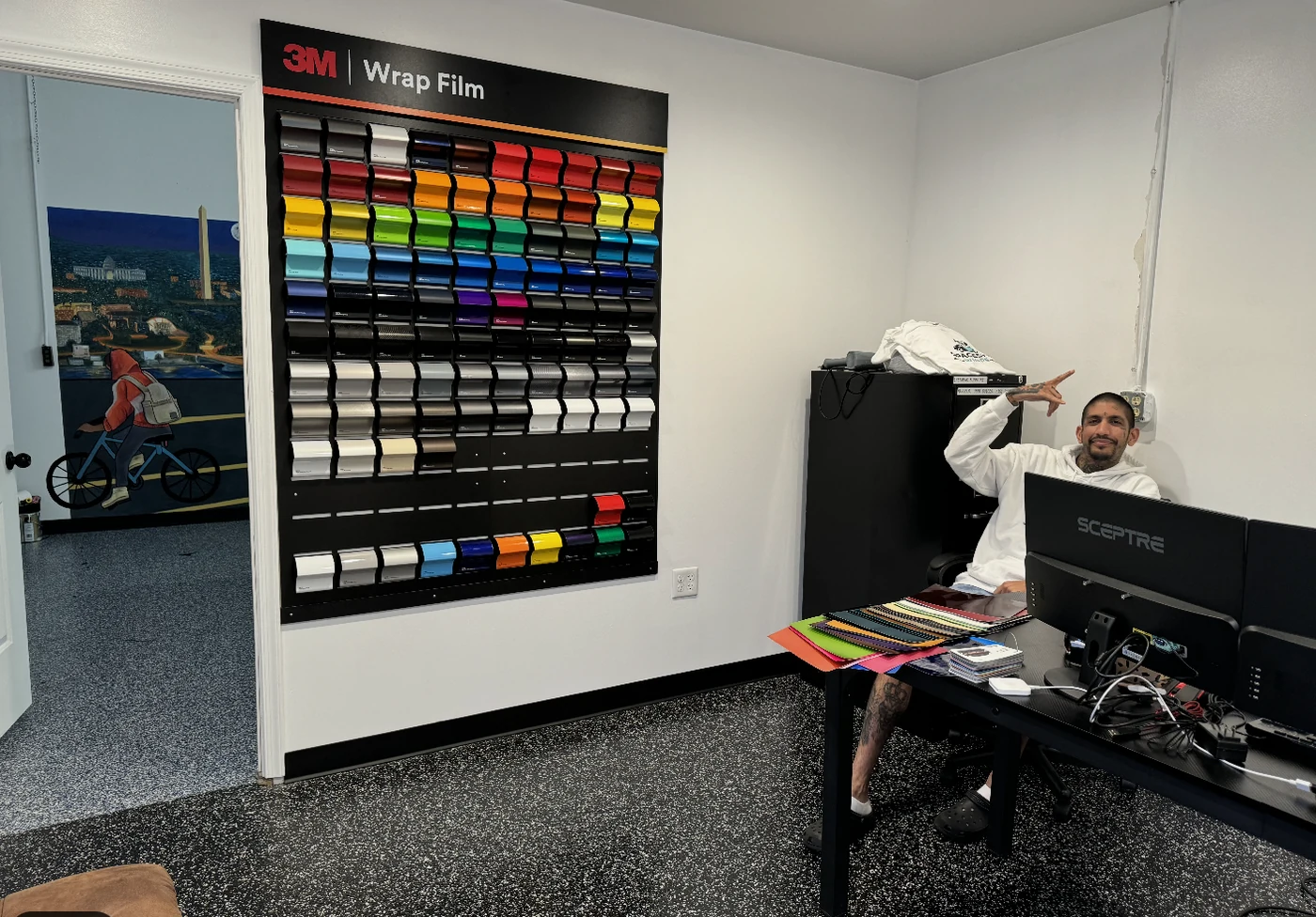
Our standard
- A named film, written downOne of 3M™, Avery Dennison®, Paradox or Space Film — never unbranded, never unspecified, and never decided at the car.
- Premium cast filmCast automotive film, not calendered signage vinyl. Cast is what conforms to a bumper without pulling back off it.
- Professional installationInstalled to the manufacturer’s published method for that film, including their temperature range and their application technique.
- Documented material selectionThe brand, series and color code for your car are written down and given to you, and the roll is photographed as the box is opened.
What we do not put on your Tesla
A wrap shop that will install whatever film is cheapest or nearest to hand is a different business from this one. These are not materials we buy, quote or install:
- TinyBot film
- VinylFrog film
- Unknown-brand film
- Any film we cannot name on your quote
- Generic marketplace film
- Unverified film with no published specification
- Cheap commodity film
- Film a customer supplies that we cannot trace to a distributor
- Any material substituted for a cheaper one after you have agreed a price
That last one is the one that matters most. What you agreed to is what goes on the car, and the order number for it arrives in your inbox before the work starts. Two of those rows deserve a straight word about our own cheapest option, because read alone they would seem to describe it. Space Film is cheap, and we do not publish its construction. The difference is that it is named on your quote, bought by us through a distributor rather than brought to us in a box, and the things we have not established about it are written down on its own page instead of being replaced with a specification we invented. What this list refuses is film nobody can name, trace, or stand behind the sourcing of — not film that costs less.
How the material is chosen
Material is specified for the project rather than pulled off whatever is on the rack. The vehicle, the finish, the color, where the car lives and how long you want it to last all change which film is correct — and sometimes the correct answer is the cheaper one. We would rather tell you that than sell you the expensive film for a job that does not need it.
- The vehicle
- The finish
- The color
- The application
- Expected durability
TeslaWrapper is an independent studio. We specify and install 3M™, Avery Dennison® and Paradox materials; we are not certified, sponsored or endorsed by any of them, and this is not a manufacturer certification. 3M™ and Avery Dennison® are trademarks of their respective owners. Space Film is our own line, not a product of any of those companies, and nothing any of them publish applies to it. We make no claim about where any individual roll of any of these films was manufactured — we have not verified the manufacturing origin of any particular product, and that is as true of our own line as it is of theirs.